


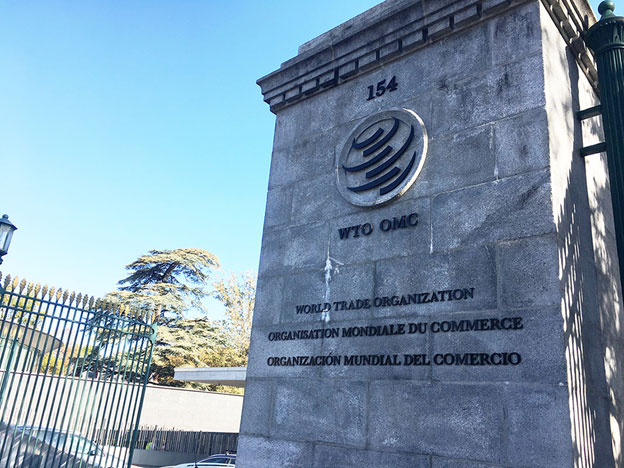
The Role of the Africa Group in WTO Reforms discussions
This year, the World Trade Organisation’s (WTO) 14th Ministerial Conference is taking place in Yaoundé, Cameroon. Only Kenya hosted the event among African nations in 2015. Africa represents around 27 per cent of the WTO membership. Of 45 African WTO members, 41 were already members of the General Agreement on Tariffs and Trade (GATT), the predecessor of the WTO.
The Ministerial Conference is the WTO’s highest decision-making body and meets every two years. It brings together trade ministers from all 166 member states. Their mandate involves decisions on trade rules, negotiations, and addressing issues in the global trade system. The increasing volatility in the trade system, including rising protectionism and geopolitical fragmentation, poses increasing challenges for the WTO.
African nations and the global South at large are becoming important players in the trade system as they carry a larger share of the global economy. Emerging markets and developing economies account for around two-thirds of global growth in recent years. With traditional alliances being tested, advanced economies are diversifying their trade cooperation with key groups, including the African Group and least developed countries.
In addition, African nations are claiming more fairness and participation in the global trade system. Africa accounts for only 2.9 per cent of global trade volumes, yet it holds 16 per cent of the world’s population. By 2050, the continent’s population will be around 2.5 billion.
Crisis of the World Trade Organisation
The World Trade Organisation (WTO) has been facing testing times recently since its inception in 1995, following the Marrakesh Agreement, marking the conclusion of the Uruguay Round. Key issues include paralysis of the appellate body, lack of agreement on the Doha Development Round, and geopolitical fragmentation leading to trade blocs. For the Global South, including African economies, the development perspective is key to addressing the unequal benefits from globalisation, furthering their integration into the global economy, and reducing their dependency on raw commodities.
Equally important, the Appellate Body has been paralysed since 2019, as the United States of America (USA) blocked the appointment of new judges. The appellate body, the body responsible for reviewing disputes, requires three judges to operate. In addition, on negotiations, the WTO has made limited progress since the Doha Development Round was launched in 2001, with key deadlocks on agricultural subsidies, industrial tariffs, and special and differential treatment. As a result, plurilateral trade agreements have expanded, signifying a broader trend in the global trade system.
On 26 February 2026, the Maputo Ministerial Conference took place, with African Union trade ministers in attendance, to reaffirm their commitments ahead of the WTO Ministerial Conference in Yaounde. On WTO reform, countries reaffirmed their efforts to strengthen the WTO’s core functions of negotiation, monitoring, and dispute settlement. Identically, countries reaffirmed their respect for the core principles of the WTO, including non-discrimination and the most-favoured-nation principle.
Dispute Settlement System Reform
On dispute settlement reform, African countries maintain a long-standing position in favour of a fully functional, two-tier, binding settlement system. The mechanism was established through the Marrakech agreement in 1994. It serves to address long-standing trade disputes between states. Every agreement between states includes a provision allowing consultations when a country violates WTO rules. If a solution is not found in 60 days, then a panel process is created. In Yaounde, negotiations will centre on reforming the dispute settlement mechanism, with the Global South pushing for its restoration.
Negotiations
Despite its broad membership, the WTO has struggled this century to achieve meaningful multilateral outcomes. Negotiations have largely stalled since the Doha Development Round, which aimed to liberalise trade and establish new rules but fell apart over disagreements concerning agricultural subsidies, particularly in the global North. Because WTO decisions require unanimity among its members, building consensus has grown increasingly rare, leading to deadlocks in a fragmented international system.
Consequently, the WTO is increasingly losing its role as a forum for inter-state negotiations, while bilateral and regional trade agreements have increased in recent years. Although non-discrimination among trading partners remains a core WTO principle, reciprocal preferential trade agreements (RTAs) between two or more partners pose a challenge to this principle. As of 13 January 2026, 380 RTAs are in force, with an additional 62 in force but not yet notified to the WTO.
Development Agenda
The WTO has struggled to fulfil its development agenda, especially for African economies. Agricultural subsidies in developed economies are a persistent point of contention, while developing countries push for greater fairness and flexibility to implement industrial policies.
As a result, many developing countries, such as Mozambique, remain on the periphery of the world economy, with limited capacity for higher-value-added activities. This situation reinforces entrenched disparities among member states and deepens reliance on commodity exports.
Latest developments on reforms
After MC14, ministers committed to pursuing reforms. Norway acted as a reform facilitator and presented a report summarising consultations with member states at the General Council meeting on 10-11 March 2026. The Least Developed Countries Group, the African Group, the African, Caribbean and Pacific Group, the United States, the European Union, China, Paraguay, and the United Kingdom each submitted proposals.
Specifically, the report submitted by Norway outlined a work plan and noted the need to reform the WTO’s dispute settlement system. Discussions have focused on points of convergence, including development, special and differential treatment, decision-making, and level-playing-field issues.
Scenarios for MC14
Best case scenario:
By MC14, members agree to a reformed dispute settlement system. A two-tier mechanism, with calibrated adjustments, addresses concerns about timelines and judicial overreach. Progress is seen in agriculture (targeted subsidy disciplines), fisheries (Phase II enforcement and compliance), and clearer frameworks for plurilateral agreements within the WTO architecture.
Baseline scenario:
MC14 consolidates a hybrid system. The WTO remains operational, increasingly complemented by plurilateral agreements (e.g., on digital trade and investment facilitation). Dispute settlement reform is incomplete, relying on interim mechanisms and selective participation.
Worst-case scenario:
MC14 fails to deliver meaningful reform. The WTO’s role continues to erode. Major economies shift toward regional agreements, unilateral measures, and strategic trade policies. Multilateral processes are sidelined. Dispute settlement remains non-functional.
Policy considerations for Mozambique
1. Continue building coalitions to advance shared goals.
To strengthen their positions, Mozambique and other developing nations should actively join coalitions like the African Group, G90, and sector-specific alliances. These coalitions amplify their influence, enabling them to shape WTO reforms and advocate for policies aligned with their development needs.
2. Push for policy space for sustainable development.
Mozambique, together with the African Group, should prioritise reforms aligned with its development priorities and realities to foster industrialisation and economic diversification. In addition, it should push for other long-standing discussions on technology transfer to improve productivity and sustainable growth and advocate for special and differential treatment that allows greater flexibility in implementing trade rules and in benefiting from global trade.